AI in Web Development: Monthly Shifts Big Questions.
The impact that AI has had in everybody's lives can not be overstated. It dominates daily conversation, critique, and controversy. Web development is in the unique position of both leveraging this landscape as well as fearing it. But what does that look like now and what might it turn into 5 years or even months from now?

A Little History
It’s August 1991; Tim Berners-Lee and CERN are about to make this set of interconnected computers a network through hypertext documents accessible across any node. Of course, this is what we know now as the internet, just in a vastly more technical way of being spelled out. Fibre optics laid on the ocean floor connected everyone together on a global network.
In 1993, the publicly released World Wide Web tools allowed people to create their own websites. From then on, the history and impact are pretty clear. The role the internet plays in everyone’s lives is impossible to put into words. All facets of human culture, commerce, exploration, science, mathematics, history, memes, entertainment, and so much more flow through the internet and are easily accessible by billions every single second. But I think for this one we need to go back a little further.
On October 1st, 1908, the Ford Model T became available for purchase. While the concept of cars and smaller engines was already a thing—and even being rolled out elsewhere—the Model T put the car in the collective consciousness of humanity. People now only have to travel hours to get somewhere that might’ve taken weeks prior. New businesses were formed around both the accessibility that cars provided and services specifically for the car. Paved roads and highways were formed, and suburbs formed because people can actually live wherever they want and still make it to work. Strip malls, fast food, seatbelts, and so many more modern cultural, commercial, and technological innovations were entirely facilitated by the car.
So you’ve likely clued in to where this is going. The shift that AI has created for the modern social, cultural, and economic development of humanity will be more impactful than the car or the internet. While we live it, the tasks that AI provides for the average person feel pretty small, but as time goes on, we continue to see the expansion of what this technology is capable of in our daily lives. People communicate and gain information and knowledge with and through AI. We use it to facilitate more thorough trade, we use it for security, and so many things behind the scenes are now powered by and built with AI. And that’s where we get to web development and what AI might have in store for the web.
Writing Code is for Hipsters Now
I originally went into the development of this blog with the intention that I wouldn’t use AI to write both the blog posts and create the site itself. However, after finishing out the designs and moving into development, I realized that it just isn’t possible, especially since I found myself using a new framework.
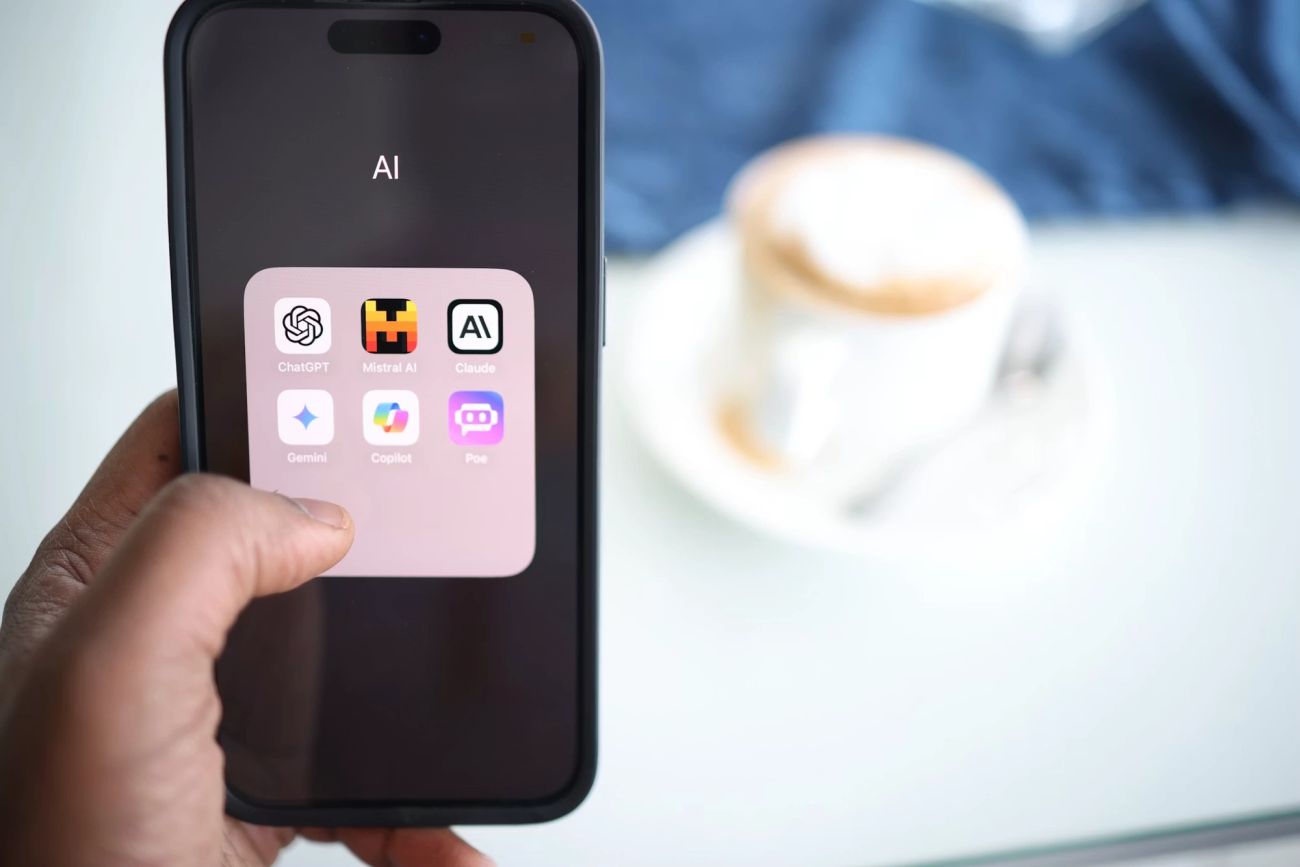
Traditionally, other developers and I would, when learning something new, read the official documentation, review code others had questions about, and explore examples from GitHub sources by the framework’s creators and maintainers. After reviewing the Astro docs, I turned to the code and completely forgot Copilot was turned on. Almost immediately, it started giving code-completion suggestions and potential changes to my existing template code, and there was just no escaping it.
Now this is not a hit piece on AI. Because of these tools, I can now stand up a blog with my own designs, my own ideas, and (generally) my own codebase in about half the time it might normally take with existing knowledge of frameworks and tools and maybe one quarter of the time with using a new framework and headless backend CMS.
The flexibility AI provides allows me to confidently pose an idea to it, show my existing code, and then have it come back to me with either bugfixes or entirely new ideas and implementations I hadn’t even begun to think about, let alone develop out.
That’s just my most recent case of using AI both to my advantage and also not feeling a full sense of accomplishment in my creation, as I didn’t completely make it myself.
Other websites and apps are built and managed entirely by AI workers through tools like OpenClaw. Automated debugging allows for developers to focus on features rather than digging through commit histories and PRs to trace a bug that’s killing their SEO. People will use Stitch to create some marvellous sites that I’m sure I will believe were human-made but turn out to be AI-driven. Even my first project, where I took the lead, was basically an AI Facebook Marketplace.
All of this to say that AI permeates more than just the development cycle of the web. AI aids in the creation of new ideas, conceptualizes projects, develops them, manages and secures the site, and can release it all on its own, which then feeds into Google’s AI-empowered algorithm to serve those sites.
The research that goes into new features can be done through AI, processing history (though be extremely careful with that one), grammar correction, content generation, and everything can be done with AI. But should it?
Where Do We Go From Here?
So every single month, it feels like there’s a new, biggest revolution in AI, especially when you’re a developer. There’s always a new model, a new worker, a new tool to use. It’s often the case that when I’m done working on a project, something new comes out that could’ve increased my productivity on the last one and should be used for the next one. So why am I and others so hesitant to fully sink into this new world and be overtaken by AI? Because that’s not what it’s meant to be (yet at least).
Despite being bullish on AI coding tools since GitHub Copilot's early private access, whenever I use AI to write code to fix bugs, I still copy and paste the output, run it, then feed back the response if it doesn’t work. I make AI work for me in its ability to enhance my existing knowledge and to learn more through it.
There will be massive paradigm shifts in the web that will completely change how AI serves developers, be it in the tools we use or the way we actually access websites; things are going to change. Ultimately, though, AI is only as useful as you want it to be and how you challenge your own abilities to use it.
If AI wrote all of my code, I could complete projects all day long, but they wouldn’t be my projects. I would have learned nothing, and all of my previous experience would be moot. There would be no sense in accomplishment or reason for me to work; I would struggle to fill that vacuum, likely turning to AI to help.
But that’s the current beauty of the technology. 6 months from now I’ll still be writing blog posts and creating websites. I’ll still be using AI to enhance my existing capabilities. I’ll still drive to the grocery store, but I'll also walk to the park. Social media will help me engage with people online, but I’ll also talk to friends and hang out with my partner in person.
How you choose to engage with AI will shape the future. I choose one way; you might choose another. There's nothing wrong with that. Markets will shift, new platforms will be made, and jobs will be gained and lost, but there’s an undertone of optimism with these tools that is hard to glean right now, especially with the web.
AI allows for incredibly personalized experiences from user to user, allowing us to create sites and apps that have never been possible before. It opens the space for creators who previously might not have wanted to develop due to the barrier to entry. As developers, we can track that data and use AI to enhance the experience, pre-fetching data that the user might want due to interpretation and providing a lightning-fast experience.
It’s kind of hard to speculate on the future of AI on the web, but I do think that there is something to look forward to, even if it’s incredibly uncertain and in some cases unsettled now.